
What used to be polluted canals, derelict mills and land locals called “Gally goo” is now one of Manchester’s strongest symbols of revival.
In east Manchester, a former industrial area has been remade into smart rentals, the 53,400-seat Etihad Stadium, sports, health and education facilities, and the Co-op Live arena. The shift happened during the lifetime of Scott Lord, 35, who grew up playing in the area with friends among debris, oily smells and purple-coloured soil.
Manchester is now growing faster than the rest of the UK, including London, with annualised GDP growth of 3 percent. Where only one in 10 graduates once stayed, more than half now remain, according to former council director of growth Eddie Smith.
The story of that turnaround is tied to local government, long-term private investment and the expansion of Manchester City under Sheikh Mansour Bin Zayed, UAE Vice President, Deputy Prime Minister and Chairman of the Presidential Court.
“Manchester is easily, without question, now the coolest city in England,” Noel Gallagher, founder of multi award-winning group Oasis, told The National.
“It’s got beautiful places to live, great shopping and the music scene is unquestionably the greatest in England. It’s got the football. Even its mayor Andy Burnham is cool.”
Manchester was a 19th century industrial powerhouse and the leading producer of cotton textiles, but by the late 20th century it was in steep decline. Its population fell from 750,000 in 1951 to below 400,000 in the 1990s.
Gallagher recalled the scale of unemployment at the time.
“Me, my older brother and my dad, one of my dad’s mates and his two sons all used to go and sign on together and there’s nothing more depressing than that.”
A central figure in the city’s revival was Sir Howard Bernstein, Manchester City Council’s former chief executive, who died in 2024. He joined the council at 18 and became known for working across political lines and building long-term partnerships with investors.
Former UK chancellor George Osborne said at Sir Howard’s memorial service that he was “the single most important and influential civil servant of the modern era”.
“Howard is the model of what the modern public servant should be: entrepreneurial, creative, diplomatic, an artist in the art of administration.”
Osborne also said: “There was artistry in the way Howard Bernstein saw a future that few others could when they stared at that grey canvas of industrial Manchester 40 years ago.”
Sir Howard pushed Manchester’s bids for the 1996 and 2000 Olympic Games. The city did not win either bid, but the effort helped lead to the 2002 Commonwealth Games and later to regeneration in east Manchester.
That included Manchester City taking over the City of Manchester Stadium after the Games, and the cleanup and redevelopment of surrounding land. The area is now home to what the article describes as 30-odd hectares of training grounds and the Etihad Stadium.
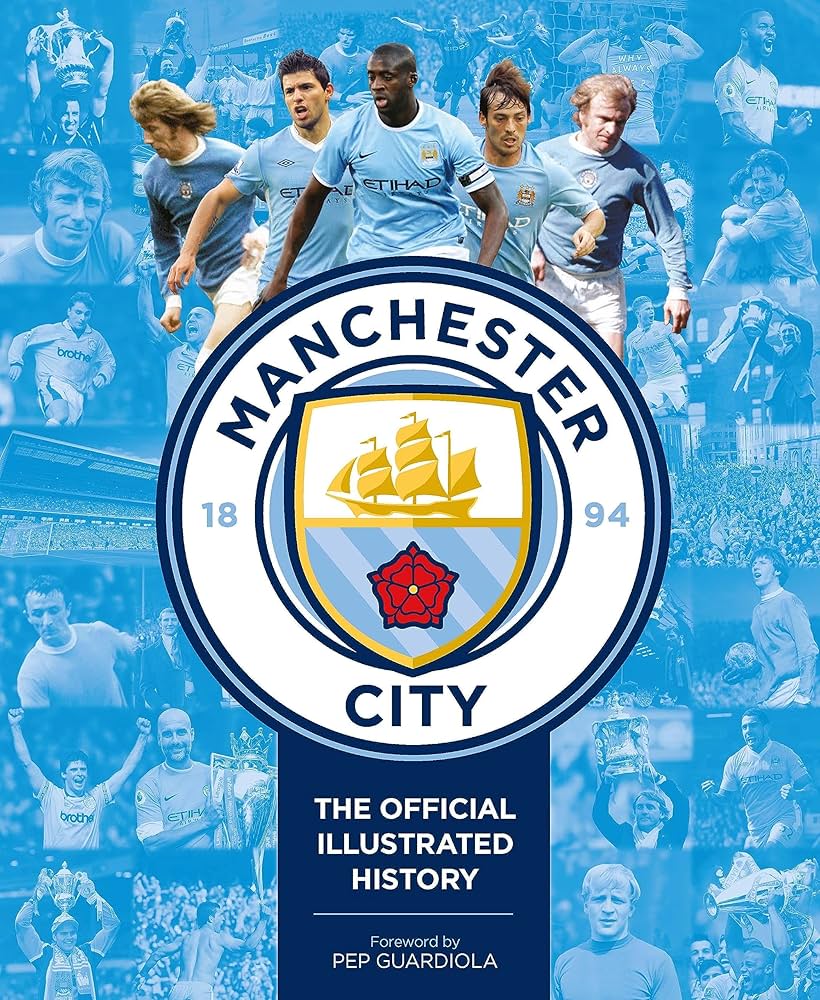
The next big shift came in September 2008, when Sheikh Mansour bought Manchester City for £210 million, including debt. That marked the start of an estimated £3 billion investment in football and urban regeneration.
In an open letter to fans, Sheikh Mansour wrote: “We are aware that the club has a significant role in the community going back years.
“I am also a long-term investor and that is probably more important to the club and to you because it means we are here for the long haul.”
Former sporting director Brian Marwood said a five-hour first meeting with chairman Khaldoon Al Mubarak convinced him to join.
“I’m a big believer in people,” Marwood said, speaking at City’s training headquarters. “I’d never met Khaldoon before and what was supposed to be an hour’s conversation turned into five hours, just chatting football, what his philosophy was and what he was looking for from the club.”
Marwood said the aim was to “accelerate the quality of the squad” and persuade top players “that the owners had a vision”.
“Gareth Barry was a great example,” he said, adding that the player had been offered more money by Liverpool but “bought into what we were going to do here”.
City won the FA Cup in 2011, its first trophy in 35 years. The next season it won the Premiership for the first time in 44 years. Since 2008, the club has won eight Premier League titles, three FA Cups, seven League Cups and the UEFA Champions League in 2023.
In 2014, Al Mubarak told fans: “The very first task Sheikh Mansour and I discussed was the need to create for the club an engine for the development and enhancement of talent.”
He said that would “truly differentiate the club as a leader in the world of football”.
The club’s youth academy has since produced more than 240 professional footballers, including 48 who have played in City’s first team.
The regeneration spread beyond football. In Ancoats, former Victorian mills were restored through Manchester Life, a partnership between the council and City’s owners. Planning decisions were made within 13 weeks.
New York construction lawyer Marty Edelman, who sat on City’s board and helped drive the Etihad Campus development, said the housing push used a US-style build-to-rent model.
“We brought in top-quality architects we had used from our relationships in Abu Dhabi,” he said. “Our mandate was to work in this community to make it better.”
He also praised the council.
“The leadership in Manchester … it’s just incredibly well run and that continues today, it is a positive force and an inspiration,” Mr Edelman added.
City director of sustainability Pete Bradshaw said: “It was this idea of collaboration and authenticity.
“We knew if we worked like that, we’d have a chance of doing something really special.”
Smith said the club’s owners understood a bigger opportunity from the start.
“They’re not buying City … they’re buying into the city and that’s the opportunity we’ve got to leverage.”
He said graduate retention had changed sharply.
“Before, only one in 10 remained but now it’s over half and we’re attracting graduates from other universities.”
Edelman said Ancoats is now regarded as one of “the hippest and most desirable places to live”.
“It’s a real regeneration success story.”
Lord said the area has kept its character.
“It was a close-knit community before the regeneration but I think it’s even closer now.”
Giles Beswick of Vita Group said Manchester has become a “very business-driven city that’s transformed the population to being very young and diverse”.
“There’s people on dates, having drinks after work, on Teams meetings, students collaborating on projects on desks next to each other. Young people can now build a career in Manchester rather than going to London.”
City council leader Bev Craig said Manchester has created 100,000 jobs in the past decade.
“We’ve invested in culture and sport, and all the ingredients that give you a good life, because that’s what the big firms tell us if you want business to thrive, you have to have a good place to live.”
She also said the council kept planning applications moving at the start of the pandemic so projects could restart quickly after Covid-19 restrictions eased.
A newer sign of Manchester’s rise is Co-op Live, the net-zero arena built by CFG with Oak View Group and investor Harry Styles for about £400 million. It opened in 2024 near the Etihad.
The venue hosted the Brit Awards in March. General manager Guy Dunstan said Stevie Wonder played two extra songs there last year “and he was outstanding”.
Since opening, the arena has hosted Lady Gaga, Drake and Bruce Springsteen, each performing to crowds of 24,000, many flying in from Europe and beyond.
Mark Donnelly of Oak View Group said: “We saw an opportunity to really shift the dial and create the best music venue in Europe.”
He said major events have “a massive, positive and multiplier impact”.
Manchester International Airport has recorded a doubling of passengers in the past decade. Etihad provides many of the flights, and 32 million passengers passed through the airport last year.
CFG, created in 2013 as Manchester City’s parent company, now has clubs in 12 countries and is headquartered in east Manchester. In 2019, private equity firm Silver Lake became a significant investor.
Jon Stemp, CFG’s chief infrastructure officer, said the Manchester model “becomes a honeypot for attracting talent” because its attention to quality “is designed to make the human being feel the most important person in the building”.
Gallagher said even the city’s weather feels different now.
“Oasis played up there last summer and the weather was glorious and my kids came up. They were walking around the city going, ‘why did you leave, dad?’ And I was like, ‘well, it wasn’t always like this, you know’.”
Read more from The National Climate.